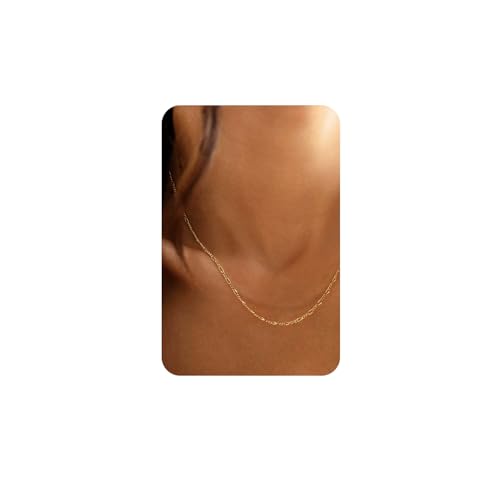
Gold-filled vs gold-plated vs solid gold: the difference
Gold plating is a microscopically thin layer that wears off, gold-filled is a bonded layer that must be at least 1/20th of the item’s weight in gold and lasts for years, and solid gold is gold all the way through. Vermeil is gold over sterling silver.
These four terms sit on almost every jewelry listing and the difference between them is a factor of hundreds in how long the piece lasts.
Gold-plated is a layer measured in microns — often less than one — deposited onto a base metal. On a ring or a chain worn daily it wears through at the contact points within months, after which you are wearing the base metal underneath.
Gold-filled is a different process: a sheet of gold is mechanically bonded to a base, and in the US the gold must be at least 1/20th of the item's total weight to be sold under the name. That is roughly a hundred times the gold of typical plating, and it is why gold-filled survives daily wear for years.
Vermeil is gold over sterling silver rather than a cheap base metal, with a minimum thickness requirement. Better than plating, and the base underneath is at least a precious metal.
Solid gold is an alloy all the way through, described in karats: 9k, 14k, 18k. It cannot wear through because there is no layer.
What to buy for what. For something you wear constantly — an everyday chain, a pair of sleepers — gold-filled or solid is worth the difference. For a statement piece worn a few times a year, plating is perfectly sensible.
We have not handled the products below, and nothing here is sponsored. How we work.