How to buy jewelry online without being disappointed
Six specifications that are usually on the listing, and which predict almost everything about how a piece will feel to own.
Photographs of jewelry are close-ups. That is the whole problem. A pair of earrings shot against a white background at eight times life size tells you nothing about the two things that actually determine whether you wear them: how big they are and how heavy.
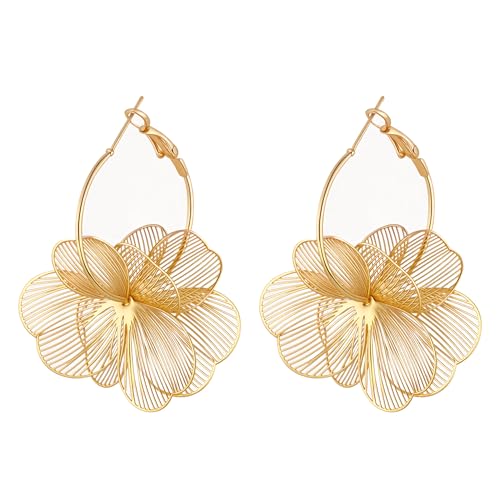
Measurements, and the one that matters. Almost every listing gives a dimension somewhere. For earrings the number to find is the drop — the total length from the top of the ear wire to the bottom. Under 25mm is a small earring. 40mm reaches the jaw. 60mm and up touches the shoulder and is the statement scale currently being shown. Hoops are quoted as diameter: 20mm is a small hoop, 40mm is a medium, 60mm is the chunky ones filling every shopping page this year. Hold a ruler against your own ear before ordering; it takes ten seconds and prevents most returns.
Weight. Listed more often than people realise, in the specifications block. Under 10g per earring is comfortable all day. Between 10 and 20g you will be aware of it by evening. Over 20g is an occasion piece and will pull on a stretched lobe. Weight is also the honest signal of what a piece is made of: a "chunky gold hoop" weighing 3g is hollow, which is fine and is how most of them are made, but it will dent.
Metal, and what the words mean. Solid gold is priced accordingly and is not what this market sells. Gold-filled has a genuinely thick bonded layer and lasts years. Gold-plated is a thin coating over a base metal and will wear through at friction points, which on a ring is months. Gold-plated stainless steel is the one worth looking for at low prices: when the plating goes, what is underneath is inert steel rather than the nickel alloy that turns skin green. If a listing does not say what the base metal is, assume it is the cheap one.
Clasps and closures, which is where inexpensive jewelry actually fails. A lobster clasp is fine. A spring ring — the little round one with a tiny lever — is the one that jams and then breaks, and it is what most cheap necklaces ship with. For earrings, a butterfly back is secure enough for lightweight studs and inadequate for anything heavy; screw backs or silicone bullet backs are what keeps a heavy earring on. Backs are also the cheapest thing to replace, so a good earring with bad backs is still worth buying.
Stringing, on anything beaded. Knotted between the beads, or strung on wire with crimped ends, survives daily use. Beads threaded onto plain nylon filament are one snag from ending up on the floor. The product photographs usually show this if you zoom in on the gap between two beads.
What the reviews are for. Not the star rating, which on this catalogue is frequently absent or meaningless, but the customer photographs. One photograph of the item on a real person tells you the scale that no product shot will, and it is the single most useful piece of information on the page. If there are no customer photographs at all on a listing with hundreds of reviews, that is itself worth noticing.
None of this requires expertise. It requires reading the specifications block that is already on the page and that almost nobody opens.
As an Amazon Associate we earn from qualifying purchases. We have not handled the products linked from this site — here is how we work.