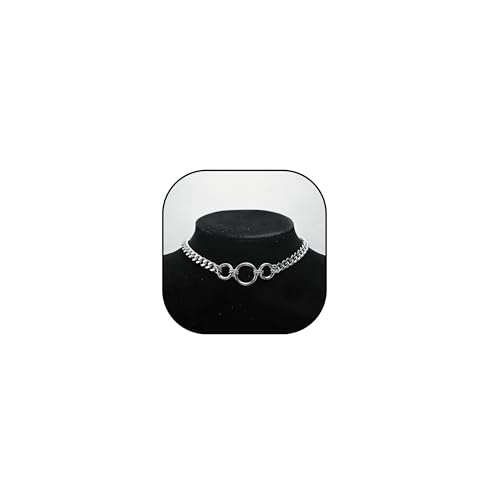
Kristen Wiig’s structured collar necklace
Most necklaces point down the chest. A collar sits across it, and that single difference is what frames a face.
Wearing: The 98th Academy Awards — A structured collar necklace by Boucheron, sitting high on the neckline
Kristen Wiig wore a structured Boucheron collar to the Oscars, and it was the shape rather than the stones that made it work. A collar is a rigid or semi-rigid band that follows the base of the neck instead of hanging from it, and it does something no pendant can: it holds a horizontal line just below the jaw.
That horizontal is the whole mechanism. A pendant draws the eye downward along a vertical, which lengthens the neck and pulls attention to the chest. A collar stops the eye at the collarbone and bounces it back up to the face. On a red carpet, where the job is to be photographed from the front, that is the more useful of the two, and it is why collars keep returning at exactly the moments when jewellery gets bigger.
Collars were one of the clearest directions at the Oscars, on a night where structured, high-sitting necklaces did more work than long ones.
The catch is that a collar is the least forgiving necklace there is about necklines. It needs empty space. Strapless, off-shoulder, a deep V or a wide boat neck all give it room. A crew neck does not, and a collar worn over one reads as a mistake rather than a choice, because two horizontals an inch apart fight each other.
What transfers
Necklaces work by direction, not by price. A vertical — pendant, lariat, long chain — lengthens and points at the chest. A horizontal — collar, choker, short strand — frames the face. Decide which one you want before you decide anything else, then check the length in inches against your own neck, because that is the measurement a photograph of somebody else will never give you.
Sources
- Forbes — 3 Statement Accessory Trends That Dazzled At The Oscars 2026 (read Aug 17, 2026)