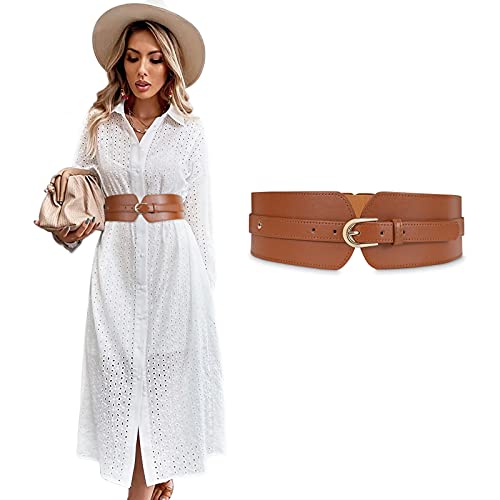
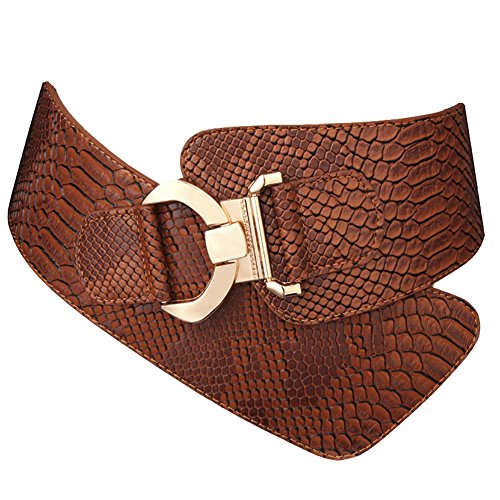
A belt with a buckle you can see across a room
Giant buckles, styled plainly over trousers and jeans. The cheapest way to give an outfit a waist.
A belt is the only accessory that changes your shape rather than decorating it, which is why it punches so far above its price. Adding one to a dress or an untucked shirt creates a waist where the garment had none, and the difference in a photograph is larger than any necklace will ever make.
The current version is loud at the buckle and plain everywhere else. A wide leather strap, minimal stitching, and then a buckle doing all the work — oversized, sculptural, gold or heavy silver, sometimes western-tooled. The styling being shown is deliberately plain: straight trousers, a tucked shirt, nothing else competing. That restraint is what stops it reading as costume.
Sizing is where belts are most often bought wrong online. Belt sizes are measured to the middle hole, not to the end, and they are not clothing sizes. Measure a belt you already own from the fold at the buckle to the hole you actually use, in inches, and buy that number. Buying your dress size produces something too small more often than not.
Two placement notes. Over the natural waist — the narrowest point, usually higher than you think — is what creates the shape; on the hips it does nothing. And a heavy buckle needs a heavy strap under it, or the belt folds and twists at the buckle all day. Thin strap plus big buckle is the combination that looks wrong in a way people cannot name.
How to wear it
- Loud buckle, plain everything else. The restraint is what keeps it out of costume.
- Measure buckle-fold to the hole you use, in inches. Belt sizes are not dress sizes.
- At the natural waist, which is higher than you think. On the hips it does nothing.
Sources
This page reports what the fashion press published. We have not handled any of the products below. How we work.
- Who What Wear — Summer 2026 accessory trends (read Aug 14, 2026)