EnglishEspañol

Dark at both ends: dressing for a commute you can no longer see in

The clocks go back at the end of this week, and the walk you have been doing in daylight since March becomes a walk in the dark twice a day. Almost nothing in your wardrobe was chosen for that.

Written on a Sunday, looking at the week ahead. We promised the problem nobody plans for: the clocks go back on Sunday, and from Monday the commute is dark at both ends.

You will not buy a new coat for this. What changes is smaller — whether a driver can see you, whether you can use your phone without taking a glove off, and whether the color you chose in a shop still does anything under a street light. Three of those four are accessory problems.

As always, this is materials, light and mechanics rather than trend reporting, so it does not borrow the authority of our trend pages.

Light clothing is not reflective clothing

This is the one worth knowing, because the usual advice is wrong. Wearing something pale is not the same as wearing something reflective, and the difference is in the physics rather than the brightness.

A white coat is diffusely reflective: it scatters light in every direction, so only a small fraction of a car's headlights ever travels back to the driver's eyes. Retroreflective material does something different — it returns light toward its source, so a driver's own headlights come straight back at them. That is why a small gray strip can out-perform an entire pale coat after dark, and why "I was wearing a light jacket" is not the protection people assume.

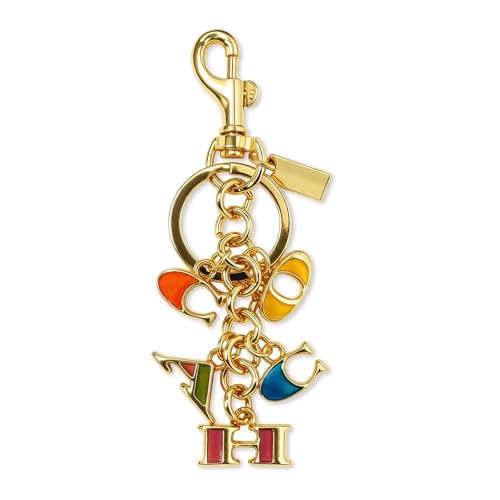
Where you put it matters more than how much you have. Road-safety research consistently finds that reflective material on the parts of you that move — ankles, wrists, a bag swinging at your hip — is recognized as a person far sooner than the same amount on your back, because the human eye reads moving points as a walking figure before it reads a shape. A reflective charm or tag clipped to the bag you already carry is a genuine upgrade and costs almost nothing.

The honest caveat: a great deal of "reflective detail" on fashion accessories is a silvery finish that is not retroreflective at all. If the listing does not say retroreflective, assume it is decorative and treat it as decoration.

Read the full trend →

More on Amazon

As an Amazon Associate we earn from qualifying purchases. Prices shown were captured on the dates given and can change at any time.

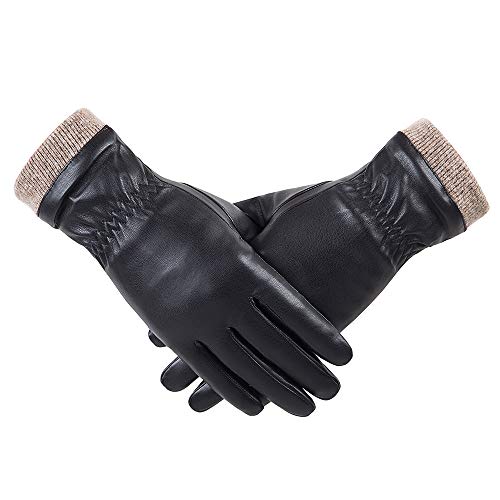
The glove you can still use your phone in

A dark commute is the one where you most need the phone — the map, the transit app, the torch — and the one where taking a glove off is least appealing. Touchscreen gloves are the answer and most people buy them badly.

How they actually work. A phone screen senses your body's charge, not pressure, so a glove only works if there is a conductive path from the screen to your skin. Makers weave a silver-coated conductive thread into the fingertips to provide it. Nothing else about the glove matters for this.

The two things to check before buying. First, which fingers — plenty of inexpensive pairs treat only the thumb and index, which is fine for tapping and useless for typing with any speed. Second, accept that it wears out: the conductive thread sits on the outside of the fingertip and abrades with use, so a pair that works perfectly in November may be unreliable by February. That is a consumable, not a defect.

If yours have stopped responding, it is almost always the thread rather than the phone, and no amount of pressing harder will help — the screen is not measuring pressure. A fold-back mitten, where the top flips off and leaves your fingers out, is the version that never stops working, and it is the honest recommendation if you use your phone constantly.

Read the full trend →

More on Amazon

As an Amazon Associate we earn from qualifying purchases. Prices shown were captured on the dates given and can change at any time.

Your colors are now being seen under a street light

You chose almost everything you own in daylight or in shop lighting. From this week, the people who see you on the way to and from work are seeing it under whatever your street has overhead, and that is a different thing.

It depends which lights your route has, and this has changed recently. The old orange sodium lamps render color terribly — blues and greens collapse toward gray, and the only things that survive are reds, oranges and warm neutrals. Many towns have now switched to white LED, which renders color far closer to daylight, though still cooler than the light in your hallway. So before you conclude that a color "does not work", check what is actually lighting the street you walk down.

What holds up under both. Warm, saturated color. A cherry red, a burnt orange, a warm camel keep their identity under orange and white light alike. Cool pastels — powder blue, mint, lilac — are the ones that go to gray mush under sodium and read washed out under LED.

The practical version: if an accessory is specifically for the dark half of the day, buy it in a warm saturated shade rather than a cool pale one, and judge it somewhere other than a bright shop floor.

Read the full trend →

More on Amazon

As an Amazon Associate we earn from qualifying purchases. Prices shown were captured on the dates given and can change at any time.

The bag you cannot find anything in

A small thing that becomes a daily irritation for exactly five months of the year. A dark bag with a dark lining is a black hole from late October onward, because you are now reaching into it outdoors, in the dark, usually in a hurry.

A pale lining is the single most useful winter bag feature and almost nobody shops for it. Anything inside a light-colored lining is seen in silhouette against it; in a black lining a black phone case, black keys and a black purse are genuinely invisible, and you end up emptying the bag onto a wall. Listings rarely mention lining color but interior photographs usually show it, so it is checkable before you buy.

If you are not replacing the bag — and you are probably not — the fix is a light-colored pouch inside the dark one for the three things you need in a hurry, which also means you can move them between bags in one movement. A pale zip pouch is the cheapest useful thing in this entire column.

And a related piece of timing. This is the point in the year when keys, cards and gloves get dropped in the dark and not noticed. If anything you carry loose matters, this is the week to attach it to something.

Read the full trend →

More on Amazon

As an Amazon Associate we earn from qualifying purchases. Prices shown were captured on the dates given and can change at any time.

Next week: into November, and the accessory people most often buy as a gift and most often get wrong.